Executive Summary: In the high-stakes world of drug discovery and molecular biology, sensitivity and reliability are paramount. Time-Resolved Fluorescence (TRF) has emerged as a transformative technology, effectively eliminating background noise and enabling the detection of low-abundance targets. This guide explores the principles of TRF, its diverse applications in drug screening and immunology, and how VKEY-BIO Technologies is leading the charge with its proprietary KeyTec® TR-FRET platform.
Time-Resolved Fluorescence (TRF) is an advanced analytical technique that differentiates specific signals from background interference based on the decay time of fluorescence.
Standard fluorophores (like FITC or Cy5) have a fluorescence lifetime of only a few nanoseconds. In contrast, TRF utilizes specialized lanthanide chelates (such as Europium or Terbium) that possess exceptionally long-lived emission lifetimes—often reaching milliseconds.
By introducing a “Time-Gating” delay (typically a few microseconds) between excitation and measurement, the detector ignores the short-lived autofluorescence common in biological samples (serum, proteins, and plastics). This results in a near-zero background, drastically improving the Signal-to-Noise (S/N) ratio.
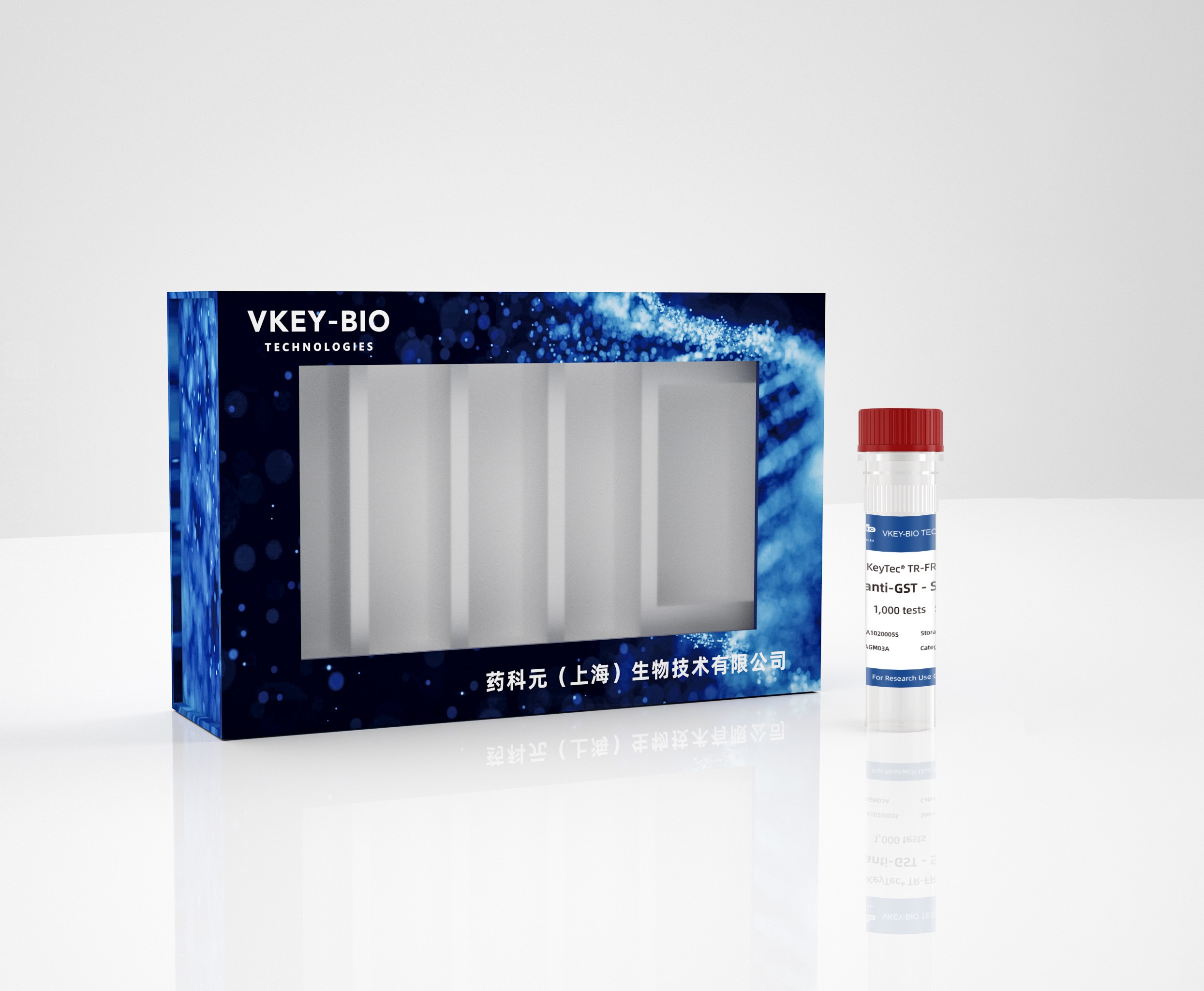
VKEY-BIO’s KeyTec® TR-FRET Technology leverages this principle to provide researchers with robust, reproducible data, even in the most complex experimental matrices.
TRF’s versatility makes it an indispensable tool across the drug discovery pipeline. Below are the primary areas where this technology is driving breakthroughs.
In early-stage drug discovery, thousands of compounds must be screened quickly. TRF, particularly in its TR-FRET (Time-Resolved Fluorescence Resonance Energy Transfer) format, is the gold standard for HTS. Its “mix-and-read” (homogeneous) nature eliminates the need for tedious washing steps, reducing labor costs and experimental variability.
Understanding how proteins interact is crucial for identifying therapeutic targets in cancer and autoimmune diseases. TRF allows for the precise measurement of these interactions at nanometer scales. VKEY-BIO’s TR-FRET Tool-Box enables researchers to quantify binding affinities and kinetics with high specificity.
G protein-coupled receptors (GPCRs) are the targets of roughly 35% of all FDA-approved drugs. TRF assays are used to monitor secondary messengers like cAMP or IP-One, providing a functional readout of receptor activation or inhibition.
As the industry shifts toward biologics, TRF plays a critical role in characterizing antibody-antigen binding and the stability of ADCs. The high sensitivity of TRF is essential for detecting low-concentration biomarkers in immunology and vaccine research.
To understand why industry leaders are migrating to TRF, we must look at how it stacks up against conventional methods.
| Feature | Traditional Fluorescence | Time-Resolved Fluorescence (TRF) |
|---|---|---|
| Decay Lifetime | Nanoseconds (Short-lived) | Micro-to-Milliseconds (Long-lived) |
| Background Noise | High (due to autofluorescence) | Minimal (eliminated by time-gating) |
| Sensitivity | Moderate | Ultra-High |
| Assay Workflow | Often requires washing (Heterogeneous) | Homogeneous (Mix-and-Read) |
| Data Quality | Prone to false positives | Highly robust and reproducible |
| Throughput | Moderate | High (Compatible with 384/1536-well) |
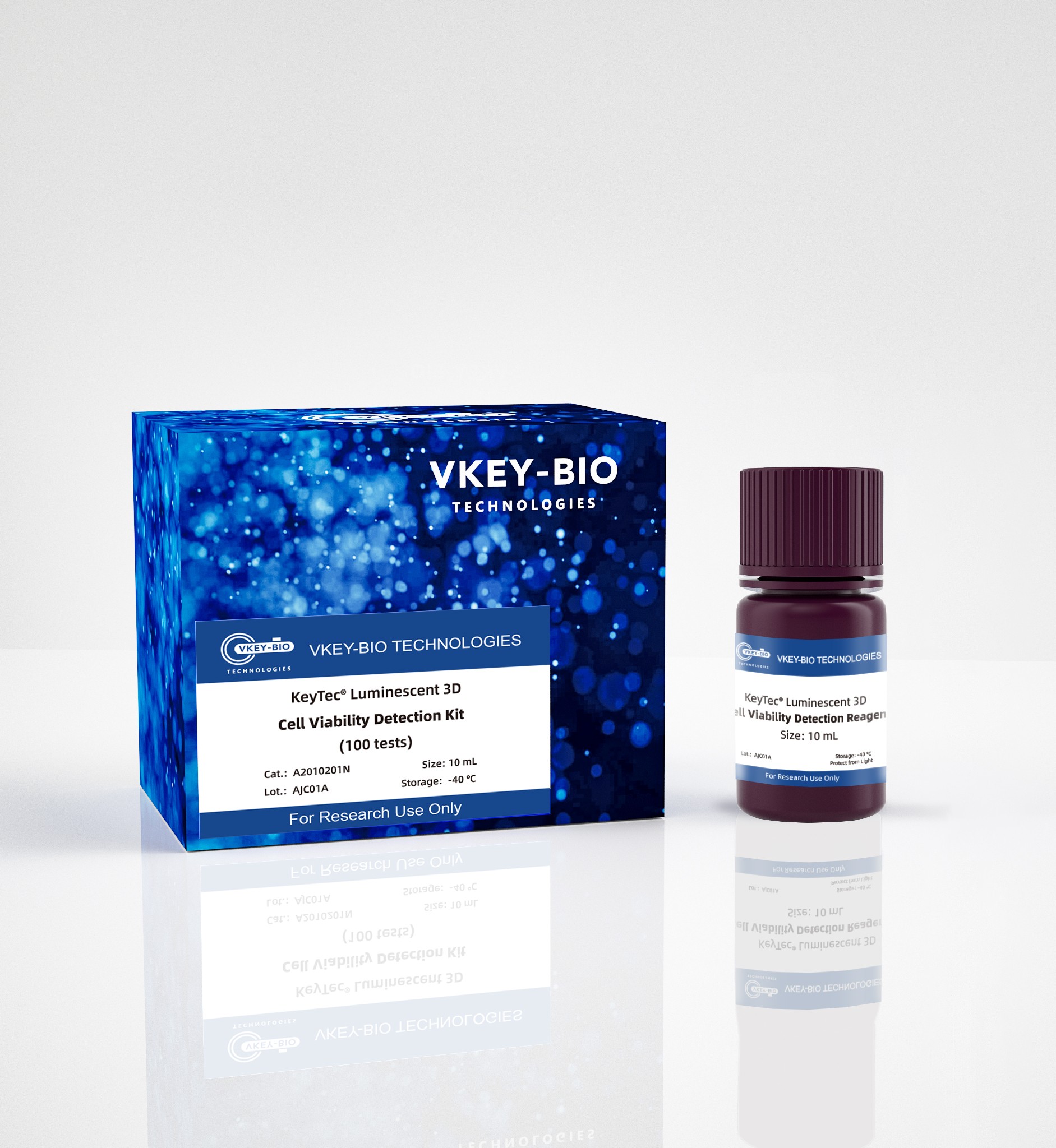
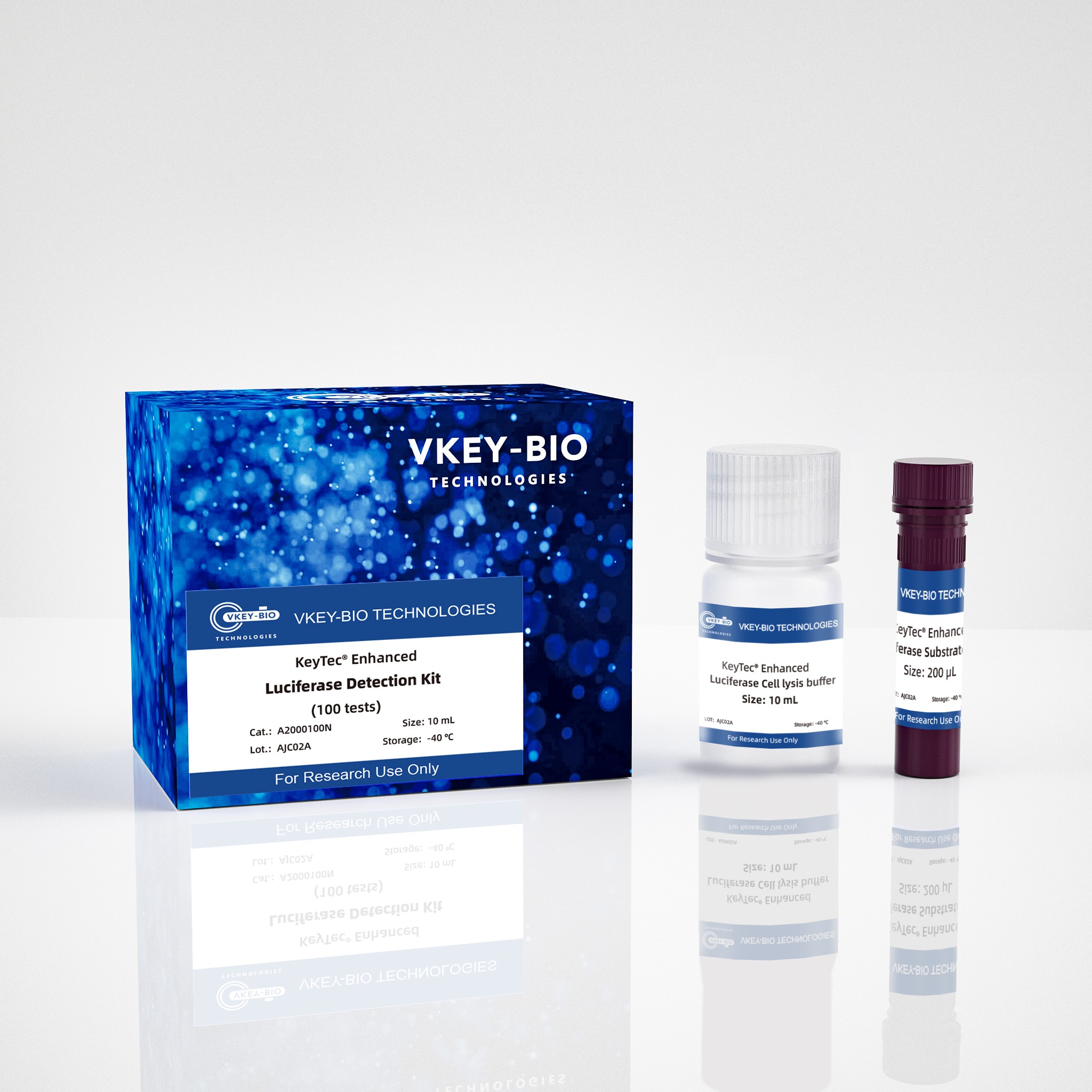
The VKEY-BIO Advantage: While traditional methods struggle with “noisy” samples, VKEY-BIO’s KeyTec® Luminescent Platform and TR-FRET solutions ensure that your results are dictated by biology, not by background interference.
Using VKEY-BIO’s TR-FRET reagents, a research team successfully identified a novel small-molecule modulator for a difficult-to-target GPCR. The homogeneous assay format allowed them to screen 50,000 compounds in a fraction of the time required by traditional ELISA.
In the development of a new Antibody-Drug Conjugate (ADC), TRF was used to measure binding kinetics. The sensitivity of the KeyTec® platform allowed researchers to detect picomolar concentrations of the target protein, providing the precision needed to optimize the drug’s potency.
The future of TRF lies in multiplexing and miniaturization.
Multiplexing: The ability to detect multiple targets in a single well using different lanthanide donors (e.g., Europium and Terbium) will provide a more holistic view of cellular signaling.
Precision Medicine: As we move toward personalized therapies, TRF-based assays will become even more specialized, allowing for the analysis of patient-specific samples with unprecedented depth.
VKEY-BIO Technologies remains committed to this evolution, continuously innovating its biochemical assay portfolio to integrate with emerging biotechnologies and automation systems.
Time-Resolved Fluorescence is more than just a detection method; it is a gateway to more accurate, efficient, and impactful biomedical research. By significantly reducing background noise and simplifying workflows, TRF allows scientists to focus on what truly matters: discovery.Whether you are conducting basic academic research or leading a global drug discovery campaign, VKEY-BIO Technologies provides the high-quality reagents and customizable solutions you need. Our commitment to innovation and quality ensures that your lab is equipped for the challenges of tomorrow.
Ready to optimize your assays? Explore our extensive range of products and services today.
Website: www.vkeybio.com
Phone: (+86)-021-5835-6939
Email: marketing@vkeybio.com
Q1: Why is TRF more sensitive than standard fluorescence?
A: TRF uses a time-delay (time-gating) to measure signal after short-lived background autofluorescence has decayed. This drastically reduces noise, allowing for the detection of much lower concentrations of analytes.
Q2: What are the best fluorophores for TRF?
A: Lanthanide chelates, such as Europium (Eu) and Terbium (Tb), are the most effective because of their long emission lifetimes and large Stokes shifts.
Q3: Can TR-FRET be used for high-throughput screening?
A: Yes. TR-FRET is ideal for HTS because it is a “no-wash” (homogeneous) assay, making it easily automated and compatible with 384-well and 1536-well plate formats.
Q4: How does VKEY-BIO support custom assay development?
A: VKEY-BIO offers tailored solutions where we design and validate assays specifically for your target kinase, receptor, or protein-protein interaction, ensuring optimal performance for your unique research needs.

 English